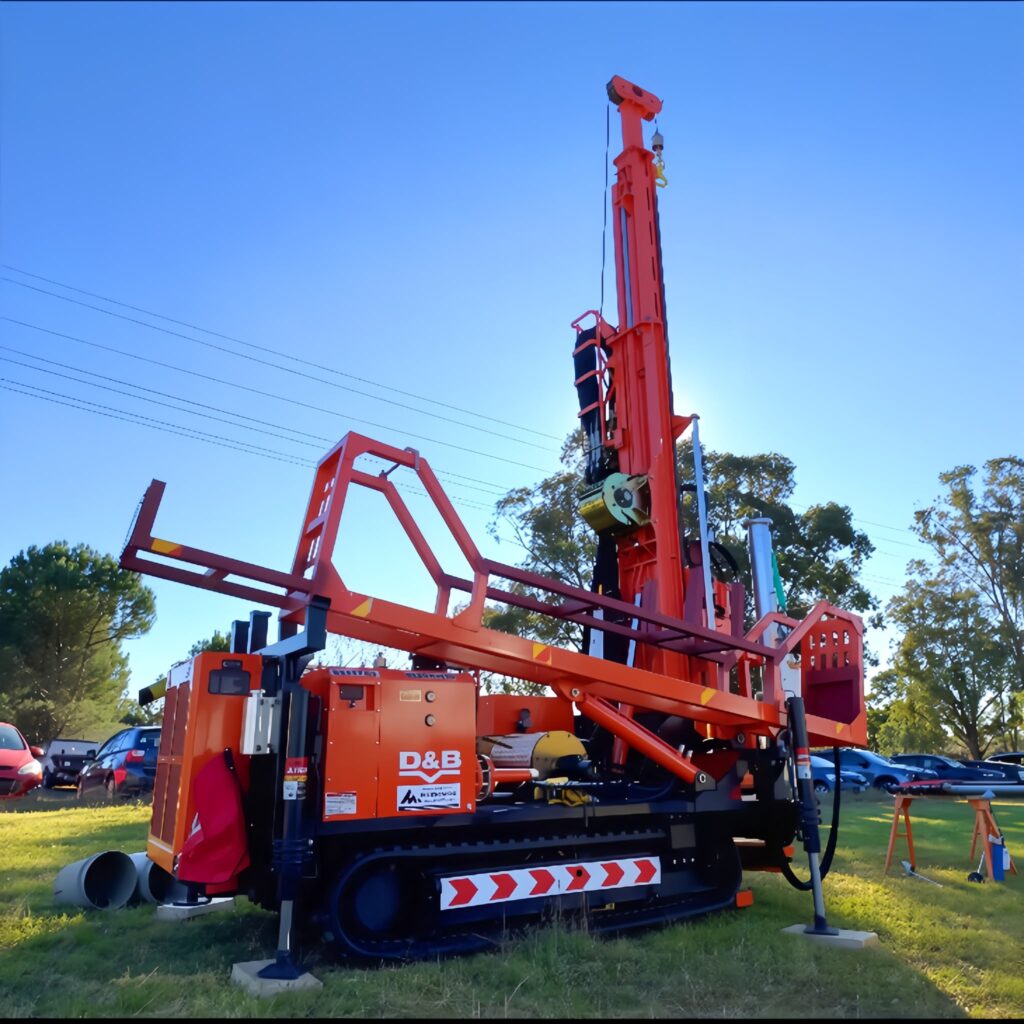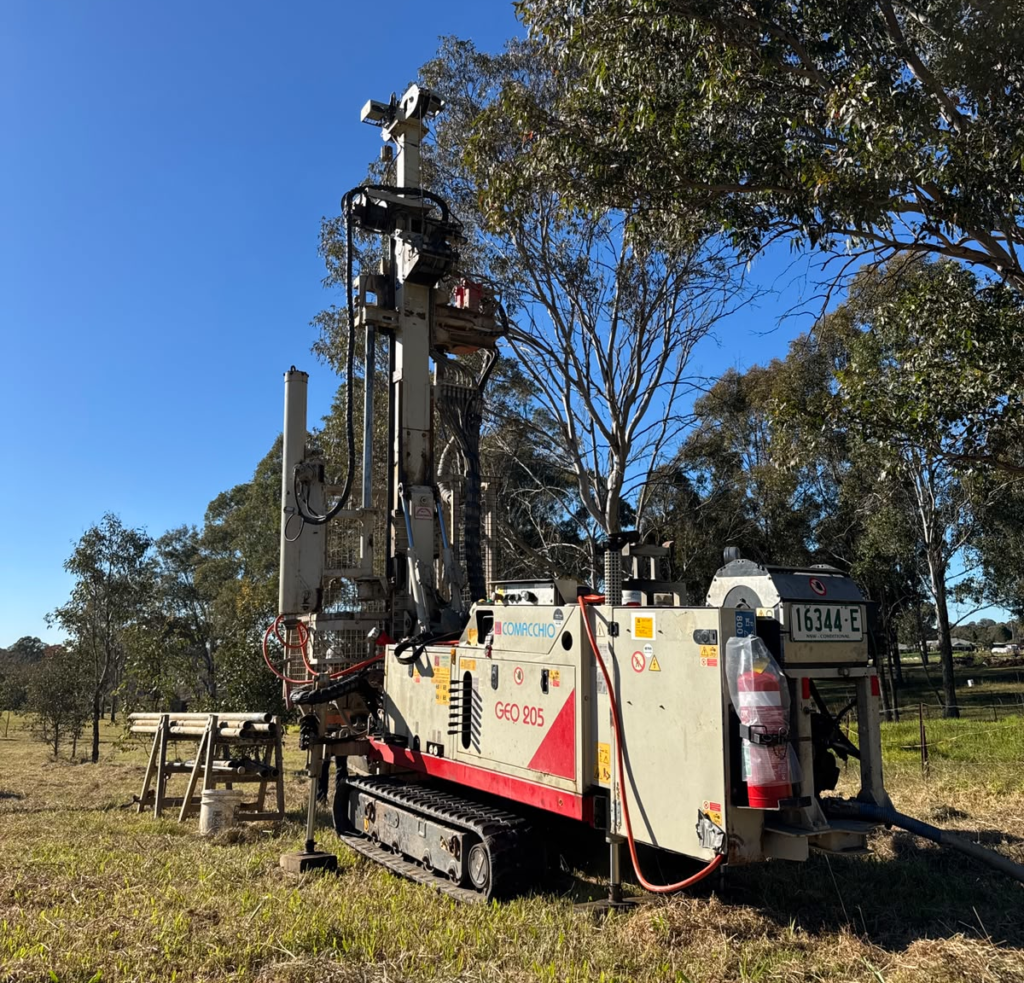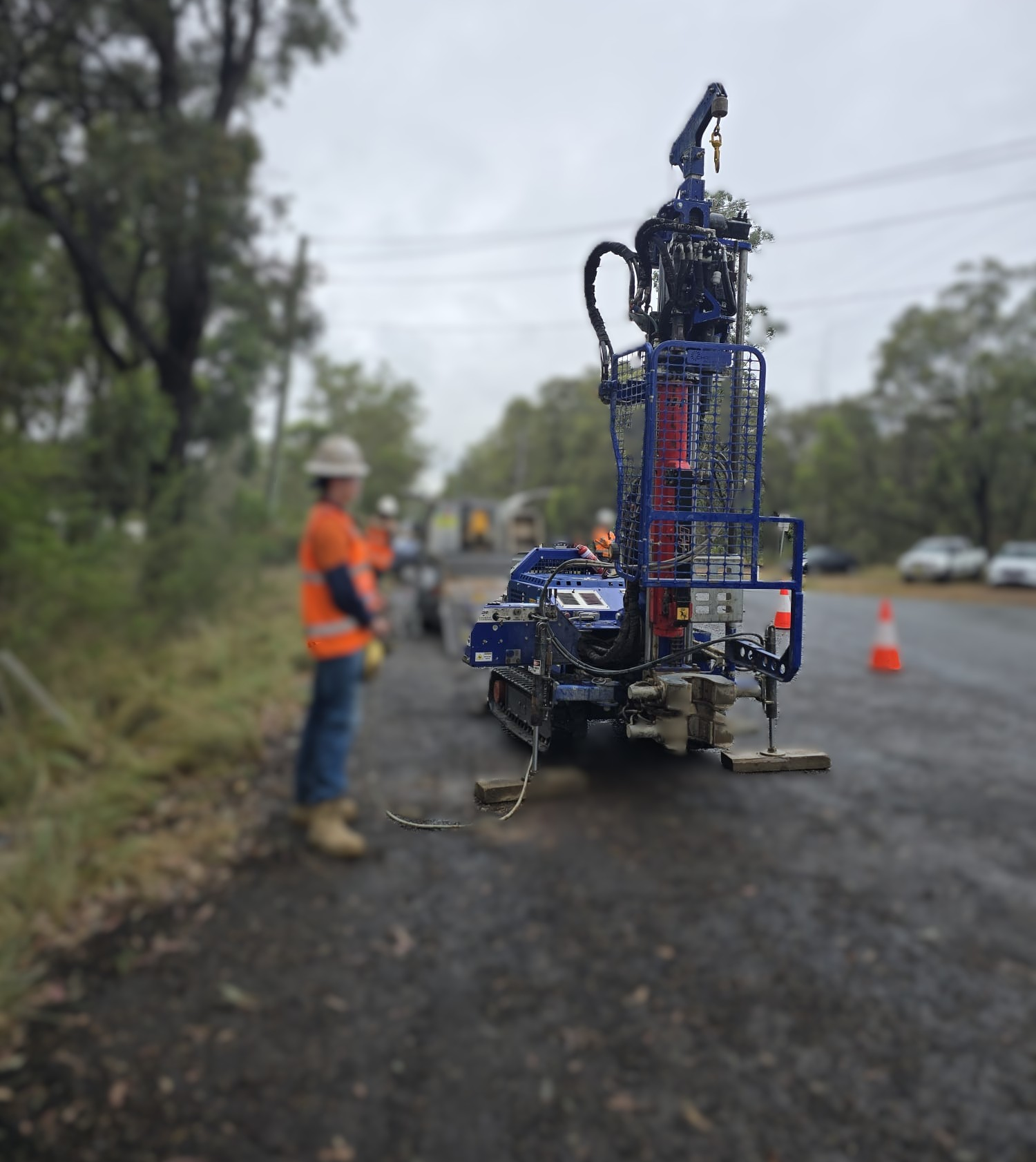
Rig Profile
Built for demanding investigations.
Rig Specifications
4.0 m
Length (with mast extension) — Tracking (Mast Down)
3.0 m
Length (with mast extension) — Drilling (Mast Up)
2.2 m
Height (with mast extension) — Tracking (Mast Down)
3.6 m
Height (with mast extension) — Drilling (Mast Up)
3.5 m
Length (without mast extension) — Tracking (Mast Down)
3.0 m
Length (without mast extension) — Drilling (Mast Up)
2.1 m
Height (without mast extension) — Tracking (Mast Down)
3.0 m
Height (without mast extension) — Drilling (Mast Up)
0.95 m
Width — Tracking (Mast Down)
—
Width — Drilling (Mast Up)
2.5 t
Mass — Tracking (Mast Down)
—
Mass — Drilling (Mast Up)
Current Capabilities
One rig. Multiple drilling and sampling methods.
01
Concrete coring
To 500 mm depth
02
Solid flight auger
To 10 m depth in soft soil
03
Rotary mud drilling (washboring)
To 20 m depth
04
Rotary air drilling (with air compressor)
To 20 m depth
05
NMLC coring
To 20 m depth
06
U50 & U75 tube sampling in soft
To firm clay soils
07
SPT
To 15 m depth
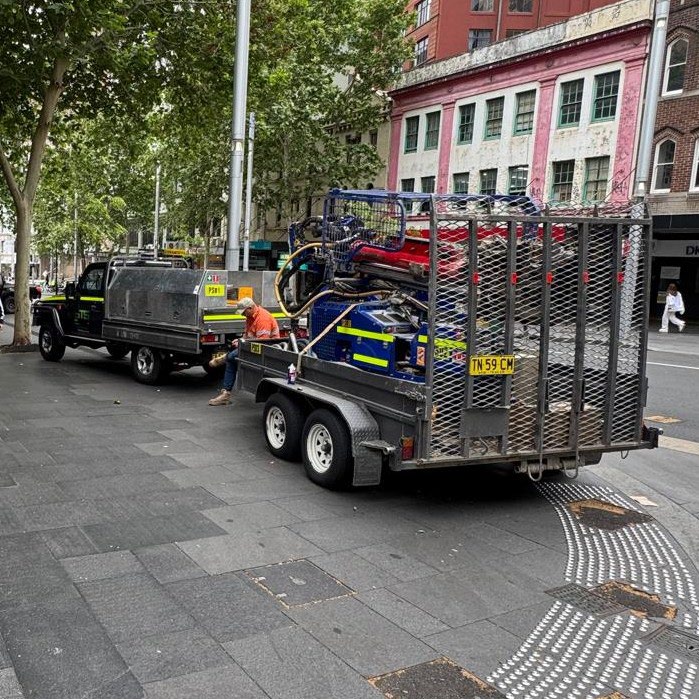
Rig Gallery
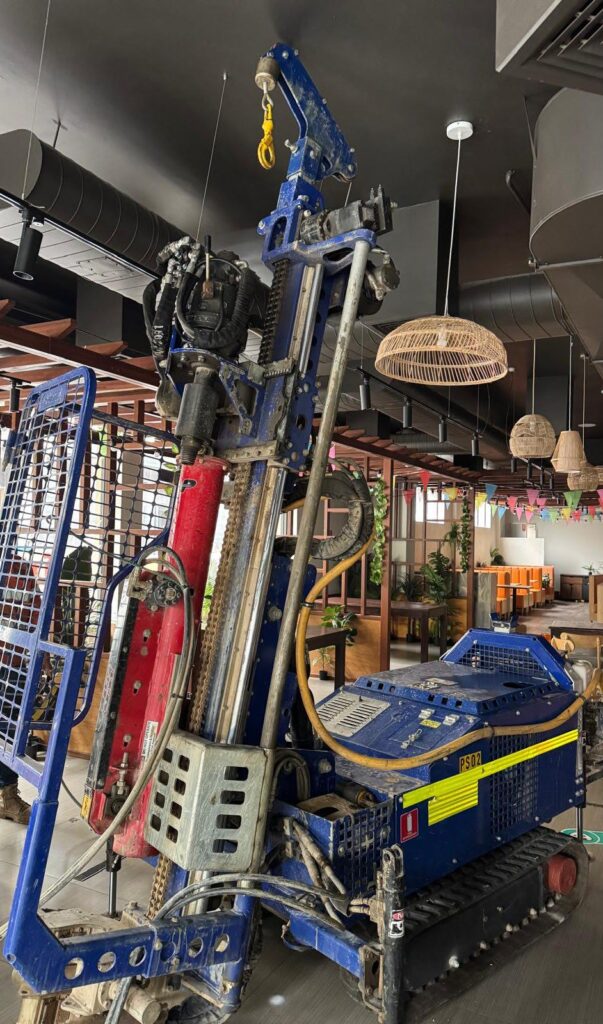
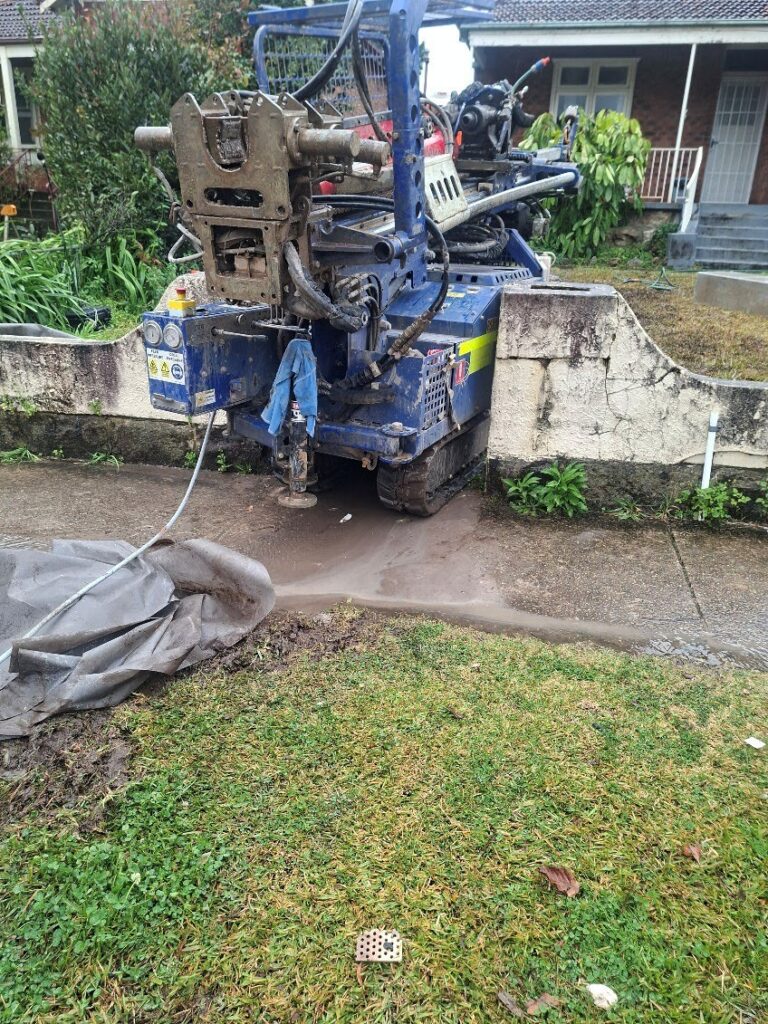
Estimated Productivity
Indicative output per 10–11 hour day.
Productivity varies with parking, access between boreholes, ground conditions, well installation, waste handling, water supply and cleanup requirements.
| Ground / Method | Good access Good access + onsite parking Good site access with parking available onsite. | Tricky access Tricky access + tricky parking Tricky site access and tricky parking onsite. |
|---|---|---|
| Decent sandstone | up to 20 m for one borehole | up to 15 m for one borehole |
| Decent shale | up to 15 m for one borehole | up to 12 m for one borehole |
Additional Time Allowances
On top of the drilling estimates above, allow extra time for: 2 hours per borehole at the depths above where the rock is highly fractured
Project Planning
Is Rig 04 – Christie CE108 (Bluey) the right rig for your site?
Review access, required drilling method, target depth, parking, water availability and borehole movement before mobilisation.